
A working air conditioner is essential during a Texas summer, especially when high heat and Gulf Coast humidity settle over Waller County. When an AC system begins to fail, indoor temperatures can rise quickly, putting comfort, property, pets, and vulnerable family members at risk.
Emergency AC repair may be necessary when your system stops cooling, makes unusual noises, leaks heavily, produces electrical odors, or repeatedly shuts down. Fast action can help prevent a minor failure from becoming a more expensive compressor, electrical, or water-damage problem.
Quick Answer: When Is AC Repair an Emergency?
AC repair becomes an emergency when the system creates a safety risk, stops cooling during extreme heat, shows signs of electrical trouble, leaks water near ceilings or electrical components, or leaves children, older adults, pets, or people with health concerns in unsafe indoor conditions.
A warm room is not always an emergency, but rapidly rising indoor temperatures, burning smells, loud mechanical sounds, or a complete system shutdown should not be ignored.
What Waller Homeowners Should Know
-
An AC system that runs but blows warm air may have a refrigerant, compressor, thermostat, or electrical problem.
-
Waller’s summer heat and humidity can place long operating demands on air conditioners, especially during the hottest afternoon hours.
-
Homes near Prairie View, Hempstead, Hockley, and Highway 290 may experience similar cooling challenges because of prolonged regional heat.
-
Water around an indoor AC unit can damage ceilings, flooring, insulation, and nearby electrical components.
-
Turning a struggling system off may prevent additional damage when you hear grinding, smell burning, or see active leaking.
Why Emergency AC Problems Matter in Waller, TX
Emergency AC problems matter in Waller because homes in this area can become uncomfortable and potentially unsafe when cooling is lost during intense summer weather. Local systems often operate for long stretches to manage heat, humidity, sun exposure, and warm overnight temperatures.
Properties throughout Waller County also vary widely. Some homes are newer and tightly sealed, while others may have older ductwork, limited insulation, additions, converted spaces, or aging HVAC equipment. These conditions can affect how quickly indoor temperatures rise after a breakdown.
Big State AC & Heating Co. helps local property owners identify urgent cooling problems and determine whether a safe repair, further diagnosis, or equipment replacement is the most practical next step. After evaluating the system, we explain the issue and available options without relying on guesswork.
Local Field Observations About AC Failures
Local AC failures commonly become more noticeable during extended periods of high heat because the equipment has less time to rest. Systems with dirty coils, restricted airflow, weak capacitors, worn motors, clogged drain lines, or aging electrical parts may continue operating under mild conditions but fail when demand increases.
Humidity also affects comfort. A system may technically run while failing to remove enough moisture from the air. This can leave a home feeling warmer than the thermostat reading suggests, particularly in rooms with poor airflow or heavy sun exposure.
These are professional field observations rather than claims based on a specific public dataset.
How AC Failure Affects Local Homes and Businesses
AC failure affects local homes and businesses by increasing indoor heat, disrupting sleep, reducing productivity, and placing additional stress on equipment that continues trying to cool. In commercial spaces, a breakdown may also affect customers, employees, temperature-sensitive inventory, electronics, or operating hours.
For homeowners, prolonged heat can be especially difficult for infants, older adults, pets, and anyone with a medical condition that makes temperature regulation harder. Even when health is not an immediate concern, high indoor humidity can contribute to condensation, musty odors, and discomfort.
Top Signs You Need Emergency AC Repair
Emergency AC repair is often needed when the system shows signs of electrical danger, major mechanical failure, active leaking, or total cooling loss during extreme heat.
1. Your AC Is Blowing Warm Air
Warm air from the vents can indicate a thermostat problem, restricted airflow, frozen coil, refrigerant issue, electrical fault, or compressor problem. Check that the thermostat is set to cool and that the temperature setting is below the current room temperature. If the air remains warm, professional diagnosis is appropriate.
2. The System Will Not Turn On
A system that will not start may have a tripped breaker, failed capacitor, thermostat issue, damaged contactor, motor problem, or safety switch activation. You may check the thermostat and electrical panel once, but repeatedly resetting a breaker is not a safe repair strategy.
3. You Smell Burning or Electrical Odors
A burning smell can point to overheated wiring, a failing motor, damaged insulation, or another electrical problem. Turn the equipment off and avoid continuing to operate it. Electrical odors should be treated as urgent, especially if you see smoke, sparking, or repeated breaker trips.
4. You Hear Grinding, Screeching, or Banging
Loud mechanical noises may indicate a loose component, damaged fan blade, failing bearing, motor issue, or compressor trouble. Continued operation can allow moving parts to cause additional damage. Shut the system down if the noise is severe or sudden.
5. Water Is Leaking Around the Indoor Unit
Water around the air handler may come from a clogged condensate drain, frozen evaporator coil, damaged drain pan, or disconnected drain line. Active leaking can affect drywall, ceilings, floors, insulation, and nearby electrical equipment.
6. The AC Keeps Turning On and Off
Rapid cycling can result from thermostat problems, airflow restrictions, frozen coils, electrical faults, or improperly operating components. Short cycling increases wear and may prevent the system from cooling or controlling humidity effectively.
7. The Breaker Keeps Tripping
A breaker that repeatedly trips may indicate excessive electrical demand, damaged wiring, a failing motor, or compressor trouble. Resetting it again and again can create additional risk. Leave the system off until it can be inspected.
8. Indoor Temperatures Are Rising Quickly
Rapidly rising indoor temperatures during a Waller heat wave can make a cooling failure urgent, even when the system is not making unusual noises. The need for emergency service becomes greater when vulnerable occupants, pets, or heat-sensitive equipment are inside.
When to Call a Professional
You should call a professional when the system does not cool after basic thermostat and filter checks, or when you notice electrical odors, severe noises, repeated breaker trips, ice buildup, or active water leakage.
Homeowners can safely confirm the thermostat setting, replace a visibly dirty filter, check whether supply vents are open, and inspect the area around the indoor unit. DIY work should stop before handling refrigerant, internal wiring, capacitors, motors, coils, or sealed system components.
Common Causes of Emergency AC Problems in Waller
The most common emergency AC problems in Waller involve airflow restrictions, electrical wear, drainage issues, and equipment stress during prolonged heat.
Restricted Airflow
Dirty filters, blocked return vents, damaged ducts, dirty coils, or blower problems can reduce airflow. Poor airflow may cause weak cooling and can contribute to evaporator coil freezing.
Electrical Component Failure
Capacitors, contactors, motors, wiring, and control boards can wear over time. High cooling demand may expose a weakened part that was already close to failure.
Clogged Condensate Drain Lines
Algae, dust, debris, and buildup can restrict the drain line. Because local air conditioners remove moisture from humid indoor air, drainage problems can become noticeable during periods of heavy use.
Refrigerant or Coil Problems
Low refrigerant, leaks, dirty coils, or damaged components can reduce cooling performance. Refrigerant problems require professional testing and should not be treated as a simple refill without identifying the cause.
Aging Equipment
Older systems may experience multiple worn components, declining efficiency, corrosion, or repeated breakdowns. In these situations, the repair history and overall equipment condition should be considered before authorizing another major repair.
How to Prevent Emergency AC Breakdowns
Preventing emergency AC breakdowns starts with regular maintenance, clean airflow paths, proper drainage, and early attention to changes in system performance.
Replace or inspect the air filter regularly, especially during peak cooling season. Keep return vents clear, avoid closing too many supply vents, and remove vegetation or debris from around the outdoor unit without opening or dismantling it.
Scheduling cooling maintenance before the hottest part of summer can help identify worn electrical components, dirty coils, drain restrictions, airflow problems, and unusual operating conditions. Homeowners should also pay attention to longer run times, uneven cooling, rising humidity, and new noises before a complete shutdown occurs.
What to Expect From Emergency AC Service
Emergency AC service should identify the immediate cause of the failure, determine whether the system can operate safely, and explain the available repair or replacement options.
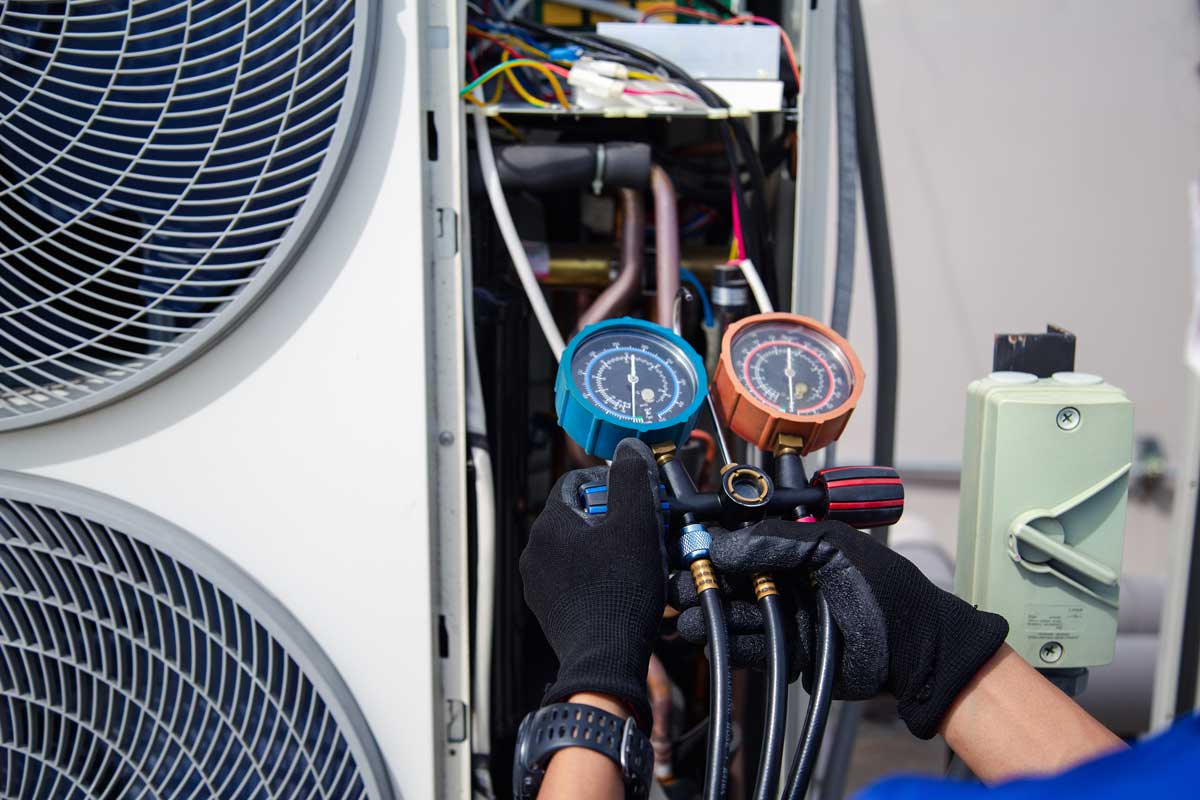
A technician may inspect thermostat operation, electrical components, system pressures, airflow, coils, motors, drainage, and temperature performance. Some problems can be corrected during the initial visit, while others may require a specific part or a broader discussion about equipment condition.
The realistic goal is to restore safe, dependable cooling when repair is practical and to provide clear next steps when it is not.
Common AC Repair Mistakes
Common AC repair mistakes include repeatedly resetting breakers, running a frozen system, ignoring water leaks, and assuming every cooling problem is caused by low refrigerant.
Mistake: Resetting a tripped breaker multiple times.
Consequence: A serious electrical or mechanical issue may continue.
Better approach: Reset it once, and call for service if it trips again.
Mistake: Operating the system while ice is visible.
Consequence: Airflow and cooling problems may worsen.
Better approach: Turn cooling off and arrange an inspection.
Mistake: Ignoring a small ceiling stain near the indoor unit.
Consequence: A drain problem may lead to hidden moisture damage.
Better approach: Inspect the AC area and address active leaking promptly.
Mistake: Choosing a repair based only on the lowest immediate price.
Consequence: Repeated failures may continue if the system has broader problems.
Better approach: Compare repair cost, equipment age, condition, comfort, and recent breakdown history.
A Common Local AC Emergency Scenario
A common local scenario involves an air conditioner that seems to work in the morning but loses cooling during the hottest part of the afternoon. The system may run continuously, produce weak airflow, or shut off after operating under heavy demand.
This pattern can point to several possible causes, including a dirty outdoor coil, weak capacitor, failing motor, restricted airflow, refrigerant issue, or equipment that can no longer meet the home’s cooling load. A proper inspection is needed to identify the actual cause.
Related AC Service Solutions
The right service solution depends on the source and severity of the problem. Emergency AC repair may address failed electrical components, drainage blockages, airflow problems, thermostat faults, motor issues, or other repairable conditions.
Preventive maintenance can help catch developing problems before peak summer demand. Duct inspections may be useful when rooms cool unevenly or airflow remains weak. System replacement may be worth considering when equipment is unreliable, requires a major repair, or no longer provides reasonable comfort.
Emergency Repair vs. Scheduled Repair vs. Replacement
Emergency repair is best when the system creates a safety concern, stops cooling during severe heat, leaks actively, or shows signs of electrical or mechanical failure.
Scheduled repair may be appropriate when the system still cools but has minor performance problems, unusual cycling, or reduced efficiency without an immediate safety concern.
Replacement may make more sense when the system has major component failure, repeated repair needs, severe corrosion, poor comfort, or an overall condition that makes another expensive repair difficult to justify.
Service Areas
We serve homeowners and businesses in Waller and nearby communities across the surrounding region, including Prairie View, Hempstead, Hockley, Magnolia, and the Highway 290 corridor.
Service availability may vary by location and current demand, especially during periods of widespread summer AC failures.
The Cost of Ignoring an AC Problem
Ignoring an AC problem can lead to higher energy use, additional component wear, water damage, reduced comfort, and a more complicated repair. A weak motor may stop completely, a clogged drain may overflow, and a frozen coil may continue freezing until the underlying airflow or refrigerant issue is corrected.
Waiting can also reduce your repair options if continued operation damages connected components.
Frequently Asked Questions
What qualifies as an AC emergency in Waller, TX?
An AC problem qualifies as an emergency when it creates electrical danger, active water damage, total cooling loss during extreme heat, or unsafe indoor conditions for vulnerable occupants. Burning smells, smoke, repeated breaker trips, severe mechanical noises, and rapidly rising indoor temperatures should receive prompt attention.
Should I turn off my AC if it is blowing warm air?
You should turn it off if warm air is accompanied by ice, burning odors, loud noises, repeated cycling, or breaker problems. If the system simply is not cooling, check the thermostat and filter first. Continued operation may not help and could worsen some mechanical or airflow-related problems.
Why does my AC struggle during the afternoon in Waller?
An AC may struggle during the afternoon because outdoor temperatures, sun exposure, humidity, and indoor cooling demand are at their highest. Dirty coils, weak electrical components, duct leakage, insulation problems, restricted airflow, or undersized equipment can make the afternoon performance drop more noticeable.
Is a leaking AC unit an emergency?
A leaking AC unit may be an emergency when water is near electrical equipment, spreading through ceilings or walls, or flowing continuously. Turn the system off if the leak is active and significant. Even a small leak should be inspected because condensate drainage problems can cause hidden property damage.
Can I keep resetting my AC breaker?
No, you should not keep resetting an AC breaker. One reset may be reasonable after confirming there is no burning smell, smoke, or visible damage. If it trips again, leave the equipment off. Repeated trips can indicate a motor, compressor, wiring, capacitor, or electrical load problem.
How can Waller County homeowners prevent summer AC emergencies?
Waller County homeowners can reduce AC emergencies by replacing dirty filters, keeping vents open, clearing debris around outdoor units, monitoring drain lines, and scheduling maintenance before peak summer heat. Changes in noise, airflow, humidity, cooling time, or electrical behavior should be addressed before the system fails completely.
Should I repair or replace an older AC system?
Repair may be reasonable when the problem is isolated and the rest of the system is in good condition. Replacement may be more practical when the equipment has repeated failures, a major component problem, corrosion, poor comfort, or high repair costs relative to its overall condition.
How quickly can a house heat up after AC failure?
A house can become uncomfortable quickly after AC failure, but the exact rate depends on insulation, windows, sun exposure, air leakage, home size, and outdoor conditions. During intense Waller heat, close blinds, limit heat-producing appliances, use fans safely, and move vulnerable occupants to a cooled location if necessary.
Restore Reliable Cooling in Waller, TX
Fast action can reduce damage, protect comfort, and help prevent a developing AC issue from becoming a larger failure. We provide local troubleshooting and repair guidance based on the actual condition of your system.